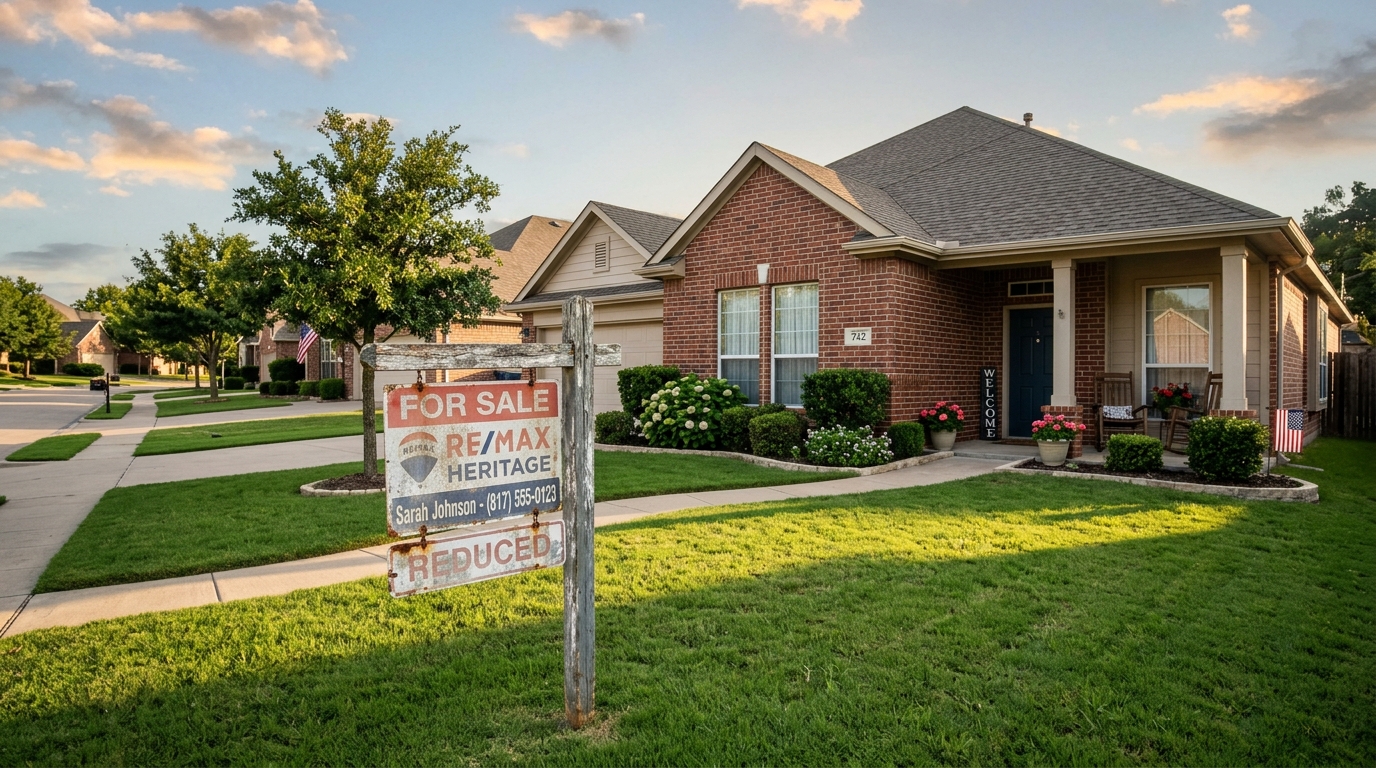
Finding the Right Offer Price for Your Dream Home
The moment it hits you, you know. You walk through that front door and suddenly you're picturing everything: morning coffee on the porch, holidays gathered around the dining table, kids playing in that backyard. You've found it. Your dream home.
But now comes the moment that separates emotional buyers from smart ones. How much should you actually offer?
I've watched countless buyers in Mansfield fall in love with the perfect property, only to either overpay dramatically or, worse, lose it to another offer. The gap between wanting a home and successfully securing it comes down to strategy, data, and knowing your local market cold. That's where most buyers stumble.
Let me walk you through exactly how to position an offer that gets accepted without leaving money on the table.
Start With Data, Not Your Heart
Here's the first mistake I see people make: they anchor their offer to the listing price. That's backwards thinking.
The asking price is what the seller wants. Comparable sales (comps) are what the market says the home is worth. These aren't the same number, especially in Mansfield's current market where inventory and buyer leverage have shifted.
Before you even think about how much to offer, your first job is to pull recent comparable sales. Look at properties that closed within the last ninety days within a half mile of the target home, matching on bedrooms, bathrooms, square footage, and year built. The median sale price of those comps, adjusted for condition and lot, is the supportable price for the house you are looking at.
This isn't guesswork. This is mathematics. And it's powerful ammunition when sellers see you're offering based on actual market data, not emotion.
Time on Market Changes Everything
The number of days a home has sat on the market tells you a story about seller motivation and market reality. A home that hit the market three weeks ago has zero leverage to negotiate with you. A home sitting at day 75 with two price reductions? That seller's psychology is completely different.
Here's the framework I use for Mansfield homes:
Well-priced home, under 30 days on market: Offer close to asking, or 1-3% below if comps support it. These homes are moving. The seller hasn't signaled flexibility. You need to be competitive here, especially if it's a turnkey property in good condition.
Sitting 30-60 days, one or more price reductions: Start 3-7% below the current asking price. The seller has already cut price once. They've already told you they're willing to move. This is where you have real negotiating room.
60+ days, slow market, or significant issues: Offers of 7-10% below asking are reasonable. Support every dollar with comp data or inspection findings.
Property Condition Is Your Pricing Lever
A turnkey home and a fixer are completely different negotiations.
For turnkey homes, offer within 2-3 percent of asking. Full price is reasonable for properties you love. If it's move-in ready and priced right, you're not getting a discount. You're buying market value.
For homes needing cosmetic updates, offer 5-7 percent below asking based on estimated improvement costs. But here's the catch: you need to actually know those costs. Get quotes. Get estimates. Include a short explanation with the offer, such as the repair quotes or comps that support your number.
For homes needing major work, start from the comp-derived market value of a turnkey version of the home, then subtract the estimated repair cost plus a disruption premium (typically 10% to 25% of the repair cost) for the time, risk, and inconvenience of doing the work. This formula keeps you from dramatically underbidding just because a kitchen needs updating.
Build Your Offer to Win
Price isn't the only thing sellers care about. Sometimes far from it.
The standard earnest money is 1-3% of the purchase price, but bumping this to 5% or higher in a competitive situation signals serious intent and commitment. That money goes toward your purchase anyway, so this costs you nothing upfront but makes your offer significantly more attractive.
Consider an escalation clause. It automatically increases your offer by a set increment above any competing bid, up to a maximum cap that you define. For example, you might offer $400,000 with an escalation clause that increases your bid by $3,000 above any competing offer, up to a cap of $425,000. This keeps you competitive without blindly overpaying if multiple offers materialize.
Then there are the terms that cost you nothing but mean everything to the seller. Find out what the seller needs: a fast close (21-30 days) or more time. A leaseback agreement—where you close but allow the seller to remain for 30-60 days—can make your offer far more attractive.
You can also negotiate additional concessions from the seller, including seller-paid closing costs, mortgage-rate buydowns, home warranties, and home appliances. Sometimes these matter more to your bottom line than a price reduction.
Don't Lowball Without Logic
I need to be direct here: offering 15% below asking without solid justification is an insult, not a negotiation. An offer 20% below asking with no justification insults the seller and gets rejected without a counter. If you're offering significantly below asking, provide comparable sales data that supports your price.
Sellers in Mansfield are smart. They've likely already pulled their own comps. When you come in with comparable sales data backing your number, you look professional. When you just throw out a number, you look either desperate or disrespectful.
Know Your Walk-Away Number First
This is the most important part that nobody does. Set your walk-away number first. Decide the highest price you'd pay, based on your budget and the value you estimated. Then choose an opening offer that leaves room to negotiate below that ceiling.
Write it down. Don't change it. Because when emotions run high in the moment, when you're in a bidding war, when you fall in love with the place, that number is what keeps you safe.
I've had clients tell me they spent an extra $40,000 on a home because they didn't set this boundary before the offer process started. That's money they'll never get back. Don't be that buyer.
Let's Talk About Your Specific Situation
Here's the truth: there's no magic formula that works for every home in Mansfield. A three-bedroom ranch near Mansfield High School has a completely different market than a newly built home in one of our growing neighborhoods. School district, proximity to jobs, lot size, condition—all of it matters.
What works is having someone who understands your local market inside and out. Someone who pulls the data, reads the market signals, and knows exactly how aggressive you need to be versus how much room you have to negotiate.
That's where I come in. I've helped dozens of buyers in Mansfield navigate this exact process. I know which neighborhoods are heating up, where you can negotiate hard, and where you need to move fast. I can pull your comparables, analyze the property, and tell you exactly what offer gives you the best chance of winning without overpaying.
You found your dream home. Now let's make sure you buy it smart.
If you're serious about making an offer on a home in Mansfield, reach out and let's talk through your situation together. We can dive into the comps, stress-test your offer strategy, and get you ready to move when the right opportunity comes.
You can search for available homes and build your buyer profile on HOUSEJET, and I'm here to help you turn that search into a signed contract on the right terms.